Info on response and situation last updated: 1 September 2025.
Social media updates last updated: 25 August 2025.
People continue to suffer and be killed as Israel commits genocide in the Gaza Strip.
Decades of repression and conflict, and an Israel-imposed blockade from 2007 on the Gaza Strip, Palestine, exploded on 7 October 2023 when Hamas attacked Israel on a large scale. In response, Israel launched massive attacks on Gaza.
Since 7 October 2023 and as of 20 August, at least 62,100 Palestinians have been killed and 156,800 injured, according to Gaza’s Ministry of Health. The Israeli authorities are purposefully and systematically destroying the conditions necessary for life in Gaza, while also severely limiting the entry of food, water, medicines, and other essential supplies into the Strip. People are being displaced into smaller and smaller areas; risking their lives for insufficient food rations from an Israeli-imposed pseudo-humanitarian organisation; and are unable to seek basic medical care from under-resourced and overwhelmed health centres and hospitals.
Meanwhile, the Israeli authorities continue to tighten their grip on Palestinians in the West Bank, by imposing further movement restrictions and increasing their military operations.
Our teams are bearing witness to the unfolding genocide in Gaza, and the international community’s hypocrisy and inaction which has allowed Israel to continue massacring people with total impunity.
Israel must stop pursuing genocide in Gaza, and an immediate and sustained ceasefire must be established.
Between 7 October 2023 and 16 August 2025, MEDSF teams in Gaza have provided
1,158,900
1,158,9
347,360
347,36
65,300
65,3
56,030
56,03
27,370
27,37
15,400
15,4
MEDSF response in Gaza and the West Bank
How is MEDSF responding in Gaza?
MEDSF currently operates in four hospitals, two field hospitals, four basic healthcare centres, and two clinics.
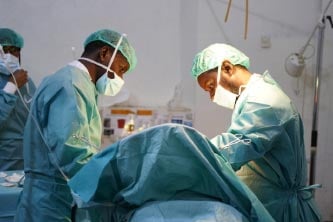
Our teams are offering surgical support, wound care, physiotherapy, maternity and paediatric care, general healthcare, vaccinations, malnutrition care, and mental health services. However, Israel’s blockade on Gaza has left hospitals without sufficient supplies despite the massive scale up of services and assistance that is needed.
South Gaza
Nasser hospital, Khan Younis – Nasser hospital is the last remaining partially functioning Ministry of Health hospital in southern Gaza, with one of the sole functional maternity wards and paediatric intensive care units in the Strip. Working with the Ministry of Health, we are supporting the four paediatric wards at the hospital, including the newborn and paediatric intensive care units. We are providing maternity care, including specialist, and pre- and post-partum, consultations. We are supporting with mental health and health promotion activities. MEDSF teams are also providing support to the trauma, burns, and orthopaedic units of the hospital.
Al-Mawasi healthcare centre, Rafah – We provide outpatient services, including general consultations, vaccinations, reproductive healthcare, wound dressing, mental health services, and health promotion. Our facility also features a 24/7 emergency room for stabilising and referring trauma patients. We are also providing malnutrition screening, and outpatient treatment for malnutrition, for children and pregnant and lactating women.
Khan Younis healthcare centre, Khan Younis – We provide outpatient consultations, vaccinations, mental health services, outpatient treatment for malnutrition, sexual and reproductive healthcare, wound care, physiotherapy, and health promotion. We also provide a minimal emergency service focused on stabilisation and referral.
Al-Attar healthcare centre, Khan Younis – MEDSF teams offer a range of services at Al-Attar, including general medicine, paediatric consultations, emergency healthcare, wound care, antenatal and postnatal care, malnutrition treatment, mental healthcare, and health promotion. A 24-hour emergency service for stabilisation and referral remains available at the centre.
Middle Area
Al-Aqsa hospital, Deir Al-Balah – In early August, MEDSF returned to the emergency room in Al-Aqsa hospital, after months of providing remote support. An MEDSF doctor and nursing supervisor are present every day, providing hands-on support during mass casualty incidents, training other medical staff, and ensuring infection prevention and control measures are in place.
Deir Al-Balah health centre, Deir Al-Balah – After operating a wound care clinic out of Al-Aqsa hospital for 15 months, MEDSF relocated these services to a health centre run by the Ministry of Health. This was due to the fluctuating security levels at Al-Aqsa hospital. At the health centre, MEDSF’s team provides wound care and follow-up, as well as malnutrition screenings for children under five.
Al-Zawaida field hospital, Deir Al-Balah – MEDSF teams are working with the Ministry of Health to run this field hospital in Deir Al-Balah, which offers 110 beds through an emergency department, outpatient department, inpatient department, and three operating theatres for orthopaedic, vascular, general, and plastic surgery. Even with an expansion of services, bringing the bed count from 90 to 110, and the two operating theatres to three, the occupancy rate of the field hospital remains over capacity.
Deir Al-Balah MFH field hospital, Deir Al-Balah – We moved some of our services from Nasser hospital to this field hospital in Deir Al-Balah. We are providing burn and orthopaedic care, and outpatient services.
North Gaza
MEDSF clinic, Gaza City – In our clinic in Gaza City we are providing treatment for burns, orthopaedic injuries, and trauma injuries.
Sheikh Radwan healthcare centre, Gaza City – We are supporting in the emergency room and trauma stabilisation point of Sheik Radwan, by providing emergency trauma and medical care during mass casualty incidents. Our colleagues also provide technical supervision and training.
Al-Helou maternity hospital, Gaza City – Beginning in April 2025, MEDSF teams joined Ministry of Health staff at this private hospital, where the maternity department of Al-Shifa hospital has been relocated. Our colleagues are supporting in the emergency room, delivery rooms, and the newborn intensive care unit. We are also providing mental healthcare and health promotion services.
MEDSF Gaza City clinic, Gaza City – We provide basic healthcare, including treatment for non-communicable diseases, general consultations, wound care, physiotherapy, and nutrition care for children under five and pregnant and lactating women. To assist in decongesting Al-Shifa hospital, we have set up a short-stay unit where patients who are stable can stay for two or three days before being discharged.
Al-Shifa hospital – MEDSF returned to Al-Shifa hospital in August 2025, opening an inpatient department and running an operating theatre, from which patients can also receive post-operative and advanced wound care. Al-Shifa hospital is the only specialised care facility serving over half of the displaced people in Gaza.
Water and sanitation
We continuously work to increase the quantity of drinkable water in the Gaza Strip by providing technical support to desalination plants, water trucking, and establishing points for people to collect safe water. Through these activities, MEDSF is providing more than 1,400,000 litres of water per day, which is enough for over 200,000 people to have six litres per day.
In partnership with a local organisation, Palestinian Agriculture and Development Association (PARC), we are building latrines, distributing hygiene kits, and supporting water treatment units in camp shelters in Deir Al-Balah and Khan Younis.
Medical evacuations
MEDSF has supported the medical evacuation of 64 people to different countries where they can receive the specialised treatment they need for their injuries or medical conditions. As of April 2025, the WHO estimates that some 12,000 people were in need of medical care that cannot be provided in Gaza.
How is MEDSF responding in the West Bank?
In the West Bank, we are maintaining activities focused on emergency care, basic healthcare via mobile clinics, and mental healthcare in Hebron, Nablus, Tulkarem, and Jenin.
Hebron
In Hebron district, we provide medical care through 17 mobile clinics. We deliver mental health services, donations to hospitals, and first-aid kits to communities. We also provide social work case management for communities affected by settlers’ attacks, including in Hebron’s Old City, Dura, and Masafer Yatta. MEDSF also runs community activities in Umm Qussa, Al Majaz, Umm Al Kheir and in H2 neighbourhood of the Hebron city. Our teams also distribute relief items to families affected by violence and forcible displacement.
Nablus
In Nablus district, we provide psychological first aid, psychiatric care, and sexual and reproductive healthcare. We have trained volunteers from the Palestine Red Crescent Society as first aid responders in Nablus, Tubas, and Qalqilya. We’re also providing basic healthcare through a mobile team that visits Ministry of Health clinics. MEDSF equipped six stabilisation points across Nablus, Qalqiliya, and Tubas, assisting with the mitigation of constraints places on ambulances and patients.
We are training local psychologists, emergency room staff at three hospitals, and medical and paramedical volunteers for the Palestinian Red Crescent.
Jenin and Tulkarem
MEDSF runs daily mobile clinics covering 19 locations across Jenin and Tulkarem. We are also supporting six clinics and nine shelters with treatment of chronic conditions, like diabetes and hypertension, mental health services, and treatment of respiratory infections. MEDSF teams distribute hygiene kits, food parcels, bedding, and water heaters. We are also supplying Khalil Suleiman hospital in Jenin with water and fuel. In Tulkarem, we are delivering food parcels and essential supplies to displaced people.
What are we asking for?
- The genocide in Gaza must stop. The ethnic cleansing and forced displacement must stop. An immediate and sustained ceasefire must be implemented, and the siege must be lifted to allow the delivery of independent humanitarian aid at scale.
- The destruction of the healthcare system, and the killing and persecution of people who provide care, must stop. Israel’s bombing and raiding of medical facilities, and killing of medical staff, including 12 of our MEDSF colleagues, are grave violations of international humanitarian law. One of our colleagues remains in Israeli detention, after his arrest in October 2024. We call for independent investigations into these violations, including the killing of our own staff and the members of their families, and urge Israel’s allies to increase pressure to end the collective punishment of Palestinians and to ensure accountability for these crimes.
- The Israeli authorities must facilitate medical evacuations for all patients who need specialised treatment not available in Gaza. Patients must be allowed to travel with at least one caregiver, and their right to a safe, voluntary, and dignified return to Gaza must be fully respected. People who have been medically evacuated, along with their caregivers, must also be provided with safe and dignified living conditions by host states. Countries in the Middle East, the EU, and beyond must open their doors to patients trapped in Gaza who urgently need specialised and life-saving care.
- Governments must stop sending weapons to Israel that are used to kill and maim our patients and to sustain its genocidal campaign. States have a responsibility to prevent genocide and to ensure that the weapons they provide are not being used to harm civilians, violate human rights, or commit war crimes. Day after day, our medical teams treat patients with terrible injuries caused by Israel’s use of explosive weapons in densely populated areas, including victims of targeted and indiscriminate attacks. These arms transfers are fuelling the mass killings of civilians, demolition of vital civilian infrastructure, and the systematic destruction of the health system in Gaza. The hypocrisy is stark: states cannot claim to uphold humanitarian values and express empty words of concern for Palestinians while supporting a military campaign that is destroying the conditions of life in Gaza.
- Israel must end all coercive measures aimed towards annexation, including, but not limited to, prolonged large-scale military operations, barriers to providing and receiving medical and humanitarian aid, collective punishment including home demolitions, settler violence, and movement restrictions.
- Israel must begin following the binding orders from the International Court of Justice, to take immediate action to prevent genocide, including to enable the provision of urgently needed humanitarian aid into Gaza. All states have a duty to prevent and respond to genocide. States providing support for Israel’s military campaign are complicit and must use their influence to protect civilians.
Situation in Palestine
What is the current situation in Gaza?
The situation in Gaza has been described by our teams as ‘apocalyptic’.
Since 18 Match, Israeli forces have been carrying out widespread attacks that disproportionately impact civilians. Palestinians in Gaza are suffering each day from Israel’s all-out military campaign, which is now accompanied by the misery of an inhumane siege.
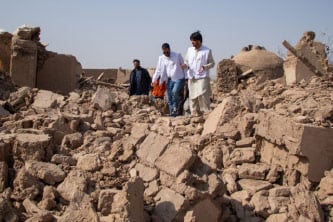
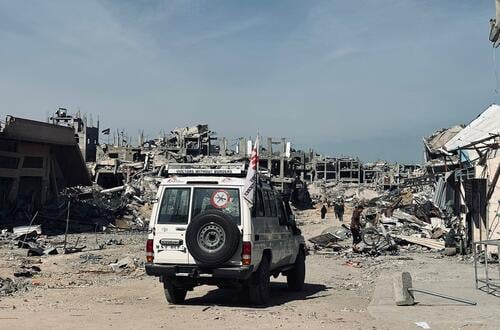
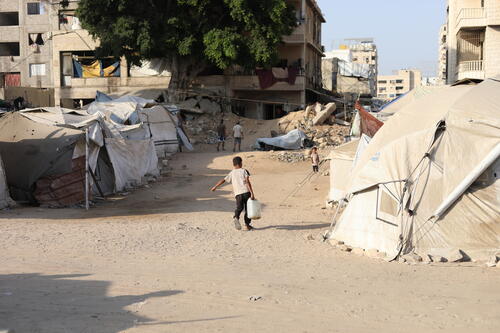
Gaza City and the North governorate of Gaza are almost completely destroyed, with no available essential services. Over half a million people have returned to the north of Gaza since the initial ceasefire, returning to neighbourhoods and homes that have been reduced to ashes. Hospitals have been razed. People are settling on the rubble of their homes with no other shelter. There is a worrying lack of health structures, water, and other essential services. People are being pushed further into a state of total desperation.
The Israeli forces have dismantled the health system and have left people without, or with very difficult, access to medical care. Out of 36 hospitals in Gaza, 18 are partially functional. As it stands, the very few hospitals and medical facilities that remain operational cannot cope with the vast medical needs.
Despite the supposed lifting of the siege on 18 May, only tiny amounts of humanitarian aid have been allowed in. Food distributions, either through the Israeli-US scheme, or people waiting for the tiny number of humanitarian trucks allowed in, are leading to deadly massacres. We are seeing humanitarian aid, and food in particular, being weaponised.
What is the current situation in the West Bank?
The situation is worsening in the West Bank, with increased settler violence and Israeli incursions, particularly in Jenin, Tulkarem and Tubas. This is causing immense suffering and severe obstruction to the provision of healthcare. According to OCHA, between 7 October 2023 and 20 August 2025, 995 Palestinians were killed in the West Bank, including 210 children.
A military operation called “Iron wall” was launched by Israel on 21 January 2025, intensifying demolitions and displacement in Jenin, Tulkarem, and Nur Shams camp. It’s estimated that between January 2024 and April 2025, at least 41,270 Palestinians were displaced across the West Bank.
People lack water, fuel and electricity. MEDSF is committed to staying and supporting residents, despite the restrictions on movement caused by insecurity.
Severe movement restrictions imposed by Israeli forces across the West Bank are making every journey complicated, whether to go to work, visit relatives, or seek medical care. Moving in the West Bank is characterised by road closures, prolonged delays at checkpoints, and the installation of new gates at village entrances.
Featured
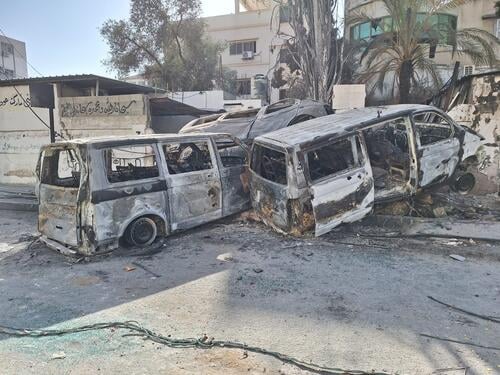
Social media updates
On our social media accounts we have posted statements and testimonies from Gaza directly after mass casualty events, attacks on hospitals, and evacuation orders. This is a selection of statements and testimonies posted to our @MEDSF account on X, formerly Twitter.
Latest articles on Gaza-Israel war

Gaza-Israel war
MEDSF denounces killing of fourteenth staff member in Israeli attack in Gaza
Statement
2 Oct 2025
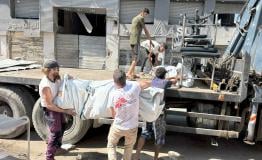
Gaza-Israel war
MEDSF forced to suspend Gaza City activities amid intensified Israeli offensive
Press Release
26 Sep 2025
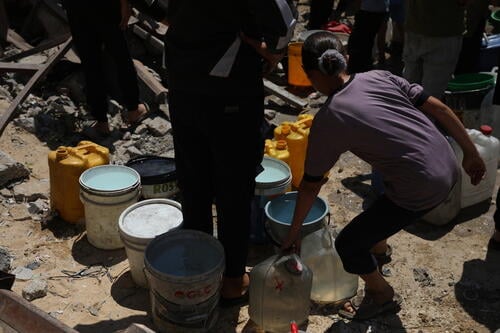
Gaza-Israel war
MEDSF condemns Israeli attack on water distribution site in Gaza City
Statement
18 Sep 2025
Gaza-Israel war
MEDSF mourns Hussein Alnajjar, thirteenth colleague killed in Gaza
Statement
17 Sep 2025
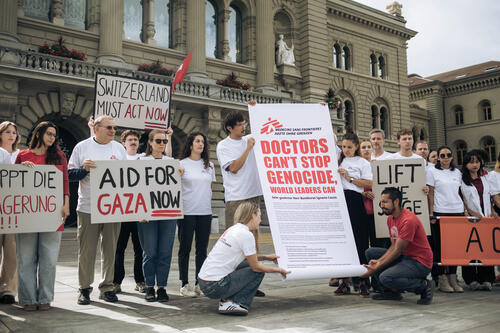
Gaza-Israel war
Gaza: Leaders of major aid groups call on world leaders to intervene following UN genocide conclusion
Open Letter
17 Sep 2025
Gaza-Israel war
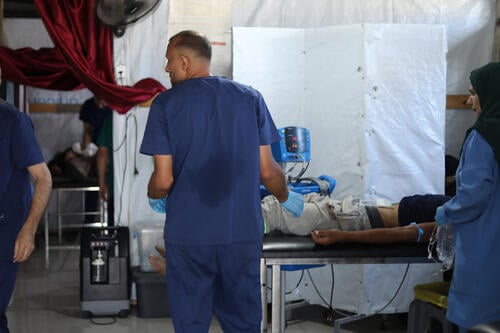
Doctors cannot stop genocide, world leaders can
Opinion
15 Sep 2025

Palestine
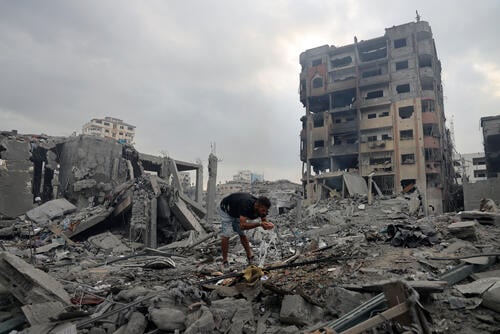
Gaza City offensive is a death sentence for one million Palestinians
Project Update
11 Sep 2025
Palestine
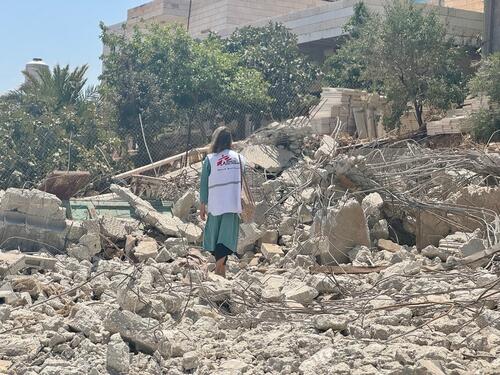
MEDSF teams see risk of ethnic cleansing in the West Bank
Press Release
4 Sep 2025
Gaza-Israel war
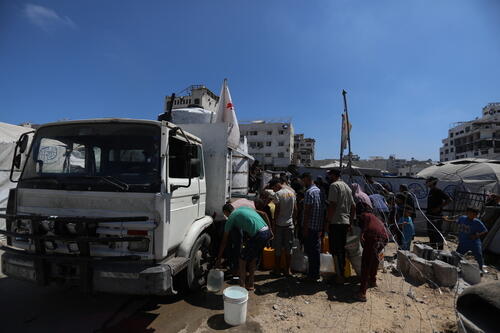
People gathering water caught up in gunfire in Gaza
Statement
26 Aug 2025
Gaza-Israel war
Testimonies and statements from our social media on the Gaza-Israel war
Project Update
25 Aug 2025
Gaza-Israel war
Israeli authorities are starving Palestinians of water in Gaza
Press Release
21 Aug 2025
Gaza-Israel war
Response to GHF allegations regarding MEDSF activities at Nasser hospital
Statement
15 Aug 2025